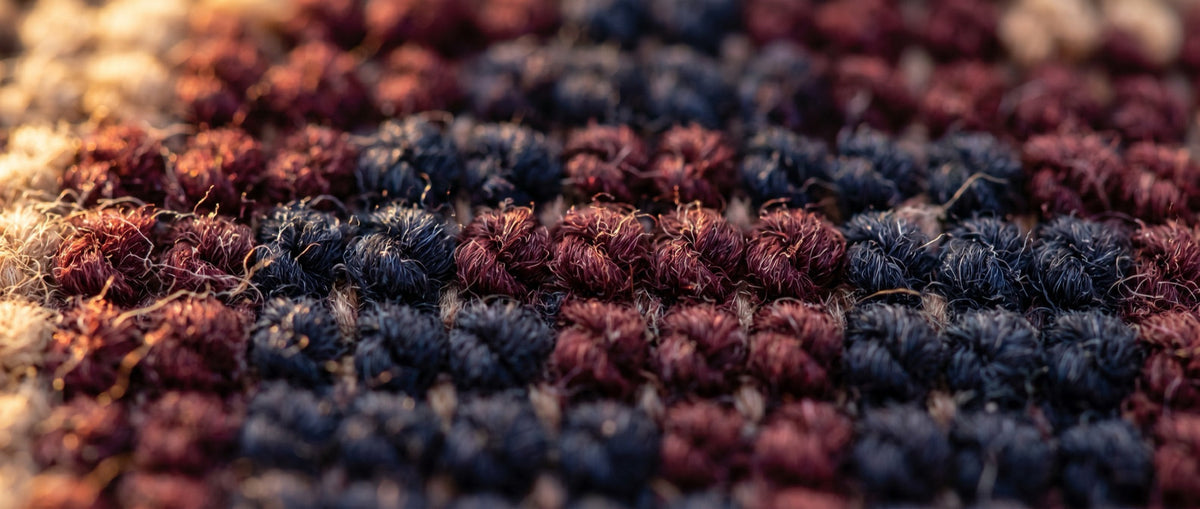
Preserving handwoven rugs requires understanding the material vulnerabilities inherent to natural fibers, vegetable dyes, and artisan construction—knowledge that separates conservation-level care from routine floor covering maintenance. Wool and silk textiles respond to environmental humidity, light exposure, and mechanical stress in ways that synthetic materials do not. Traditional vegetable dyes, while prized for their depth and aging characteristics, demand protection from direct sunlight and harsh chemical cleaners. Hand-knotted construction, with its individual knots and warp tension, requires specialized cleaning techniques that preserve structural integrity. For collectors and design professionals managing fine handwoven textiles, proper care extends both aesthetic beauty and material longevity across generations. This guide provides conservation-level practices adapted for residential use.
Material-Specific Care: Wool, Silk & Natural Fibers
Wool rugs—the foundation of most handwoven traditions from Anatolian Oushaks to Persian Tabriz—possess natural lanolin that resists soiling and provides inherent stain protection. However, wool is hygroscopic, absorbing and releasing moisture based on ambient humidity. Maintain indoor humidity between 40-60% to prevent fiber brittleness or mold growth. Silk rugs, prized for their luminosity and fine knotting, are more fragile and susceptible to water damage, requiring immediate professional attention for spills. Cotton foundations, common in many hand-knotted rugs, provide structural stability but can weaken if exposed to prolonged moisture.
Natural fiber rugs benefit from regular rotation—every 6-12 months—to ensure even wear and light exposure. This practice prevents directional pile crushing and color fading in high-traffic areas. For rugs in direct sunlight, consider UV-filtering window treatments or periodic repositioning to protect vegetable-dyed fibers from photodegradation.
Routine Maintenance: Vacuuming & Surface Care
Proper vacuuming technique preserves pile integrity while removing abrasive dirt particles that accelerate fiber wear. Use a suction-only vacuum without beater bars, which can damage hand-knotted construction and pull individual knots loose. Vacuum in the direction of the pile, never against it, and reduce suction power for antique or fragile textiles. Fringe should be vacuumed carefully by hand or with a handheld attachment, never with rotating brushes.
For flatweave Kilims and low-pile rugs, vacuuming both sides annually removes embedded dirt that settles through the weave. Shake smaller rugs outdoors to dislodge dust, replicating traditional cleaning methods used in weaving regions. Avoid steam cleaners and carpet shampoo machines, which introduce excessive moisture and chemical residues incompatible with natural dyes and fibers.
Professional Cleaning: When & How to Engage Specialists
Handwoven rugs require professional cleaning every 3-5 years, depending on traffic levels and environmental conditions. Seek specialists trained in hand-washing techniques using pH-neutral, wool-safe detergents and controlled drying environments. Avoid general carpet cleaning services that use hot water extraction or chemical treatments designed for synthetic wall-to-wall carpeting.
Before professional cleaning, document any existing wear, stains, or structural issues with photographs. Reputable conservators will assess dye stability, fiber condition, and foundation integrity before proceeding. For antique or especially fine pieces, request references and verify experience with similar textiles. Post-cleaning, rugs should be thoroughly dried in climate-controlled environments to prevent mildew and dye bleeding.
Stain Treatment: Immediate Response Protocols
Immediate response determines whether spills become permanent stains. Blot liquids immediately with clean, white absorbent cloths—never rub, which drives moisture deeper into pile and foundation. For water-based spills (wine, coffee), continue blotting until no additional liquid transfers to the cloth. Avoid colored towels or printed paper, which can transfer dyes to wet fibers.
Do not apply household cleaners, vinegar, or baking soda to handwoven rugs without professional guidance. These substances can alter vegetable dye chemistry, cause color bleeding, or leave residues that attract future soiling. For oil-based stains or pet accidents, contact a textile conservator immediately. Attempting DIY stain removal on luxury textiles often causes irreversible damage that professional intervention could have prevented.
Storage & Seasonal Rotation
Long-term storage requires clean, dry, climate-controlled environments free from temperature fluctuations and pest access. Roll rugs pile-side out around acid-free tubes wrapped in unbleached muslin—never fold, which creates permanent creases and fiber stress. Avoid plastic wrapping, which traps moisture and promotes mildew growth.
Store rolled rugs horizontally, elevated off floors to prevent moisture wicking and rodent access. Include natural moth deterrents such as cedar blocks or lavender sachets, avoiding chemical mothballs that leave odors and residues. Inspect stored rugs biannually for pest activity, checking for larvae casings or fiber damage along edges and fringes.
Padding & Placement: Structural Protection
High-quality rug pads extend textile life by cushioning foot traffic, preventing slippage, and allowing air circulation beneath the rug. Choose natural rubber or felt pads specifically sized for handwoven textiles—avoid PVC or synthetic pads that can off-gas chemicals or trap moisture. Pads should be slightly smaller than the rug perimeter to remain invisible while providing full support.
Avoid placing handwoven rugs in high-moisture areas such as bathrooms, kitchens, or entryways exposed to rain and snow. Constant moisture exposure degrades natural fibers and promotes mold growth. For entryway applications, use durable flatweave Kilims rather than high-pile knotted rugs, and ensure adequate drainage mats capture moisture before foot traffic reaches the textile.
Repair & Restoration: Addressing Wear Before Damage Escalates
Early intervention prevents minor wear from becoming structural failure. Address fringe damage, edge binding separation, and small holes immediately through professional repair services. Hand-knotted rugs can be re-knotted to match original patterns and dye lots, while flatweaves require specialized rewiring techniques.
Avoid DIY repairs using fabric glue, iron-on patches, or sewing techniques not specific to rug construction. These methods often cause additional damage and complicate future professional restoration. Reputable repair specialists will match wool or silk fibers, replicate original knotting techniques, and use natural dyes to ensure invisible repairs that maintain both structural integrity and market value.
Conservation-Level Practices for Antique and Fine Textiles
Antique and especially fine rugs warrant conservation-level care that exceeds routine maintenance. Limit light exposure to 50-150 lux, the museum standard for sensitive textiles. Use UV-filtering glazing on nearby windows and avoid direct sunlight entirely. Monitor environmental conditions with hygrometers, maintaining stable temperature (65-70°F) and humidity (45-55%).
For rugs displayed on walls, use Velcro mounting systems that distribute weight evenly and allow periodic rotation to prevent directional fading. Avoid nails, tacks, or rod-pocket installations that stress fibers and create permanent holes. Consult textile conservators for custom mounting solutions that preserve structural integrity while allowing safe display.
Explore our handwoven rug collection, where each piece includes care guidelines specific to its materials and construction. Our artisan partnerships ensure access to traditional weaving knowledge and conservation practices passed through generations. For personalized care recommendations, contact our design consultation services.
Preserve handwoven textiles with care practices grounded in material science and conservation expertise. Each rug in our collection represents artisan craftsmanship and natural materials that, with proper maintenance, will serve refined interiors across generations.