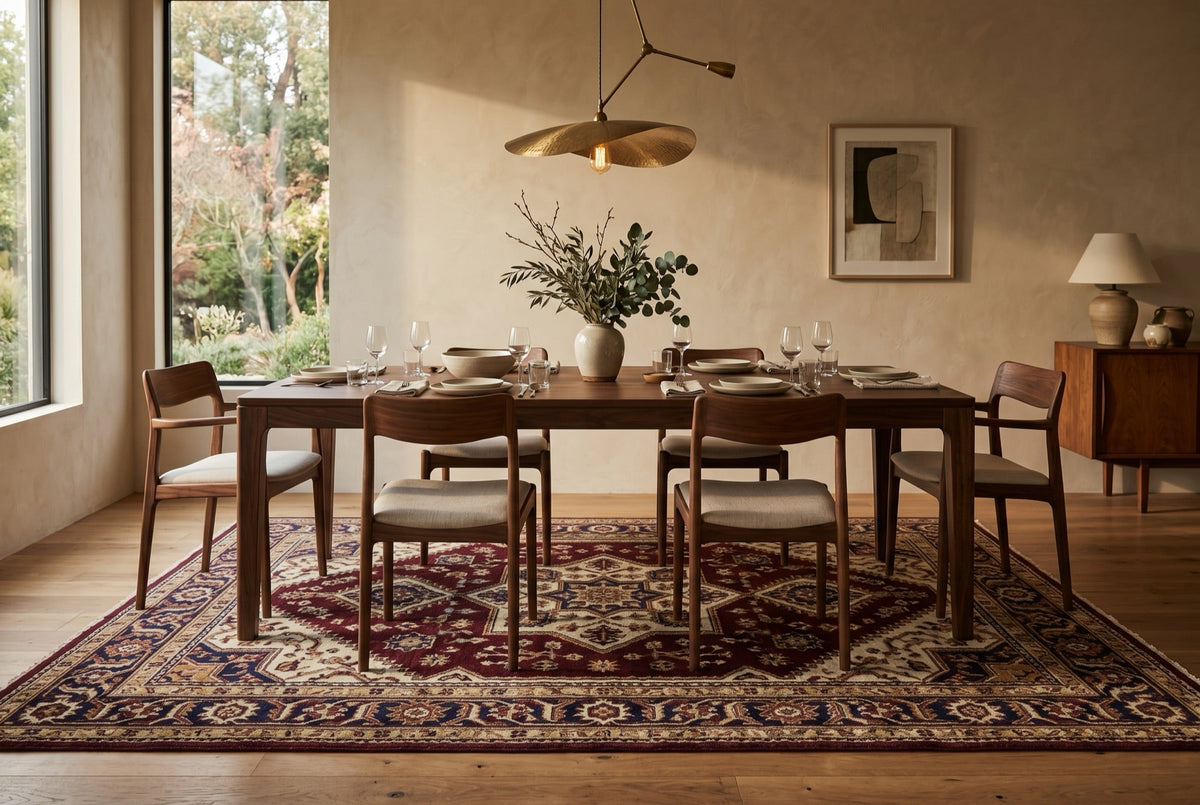
Quick answer: Oushak rugs originate in the Anatolian town of Ušak, in western Turkey, with a documented weaving tradition dating to the 15th century. They are distinguished by a soft palette of saffron, terracotta, ivory, and pale blue; large-scale botanical and medallion motifs; a relatively coarser knot than Persian counterparts; and lustrous hand-spun wool that catches light differently as you move across the room.
Oushak rugs represent one of Anatolia's most refined weaving traditions, originating in the town of Uşak in western Turkey during the Ottoman Empire's cultural zenith. Distinguished by their supple wool, muted vegetable-dyed palettes, and spacious geometric or floral compositions, Oushak textiles served Ottoman court interiors and European aristocratic collections from the 15th century onward. Unlike the densely knotted Persian traditions, Oushak weavers employed a looser knot structure that produces exceptional drape and softness underfoot—qualities that made these rugs prized for residential use rather than purely ceremonial display. Understanding Oushak design heritage provides essential context for collectors and designers evaluating both antique examples and contemporary interpretations that honor this centuries-old tradition.
Ottoman Court Origins: 15th-17th Century Foundations
The earliest documented Oushak rugs date to the 15th century, when Uşak emerged as a major weaving center supplying textiles to Ottoman palaces and mosques. Court patronage established design standards emphasizing large-scale medallions, arabesque borders, and the distinctive palette of terracotta, saffron, soft blues, and ivory that defines classical Oushak aesthetics. These early pieces featured hand-spun wool dyed with madder root, indigo, and weld—natural colorants that aged into the subtle, sun-faded tones now associated with antique Oushak character.
European demand grew significantly during the 16th and 17th centuries, with Oushak rugs appearing in Venetian, Dutch, and English paintings as symbols of wealth and cultural sophistication. This export trade influenced design evolution, as weavers adapted motifs to appeal to Western tastes while maintaining traditional Turkish knotting techniques and material standards.
Design Vocabulary: Medallions, Arabesques & Geometric Abstraction
Oushak design language balances geometric precision with organic fluidity. Central medallions—often star-burst or stepped diamond forms—anchor compositions surrounded by corner spandrels and multiple border systems. Arabesque vines, palmettes, and stylized floral elements fill negative space without visual congestion, creating the airy, spacious quality that distinguishes Oushak from denser Persian or Caucasian traditions.
Color relationships emphasize tonal harmony over high contrast. Terracotta grounds support ivory, gold, and soft blue accents, while abrash—natural color variation within dye lots—adds depth and visual interest. This restrained palette allows Oushak rugs to integrate seamlessly into both traditional and contemporary interiors, functioning as neutral foundations rather than dominant focal points.
Material Characteristics: Wool Quality & Knotting Technique
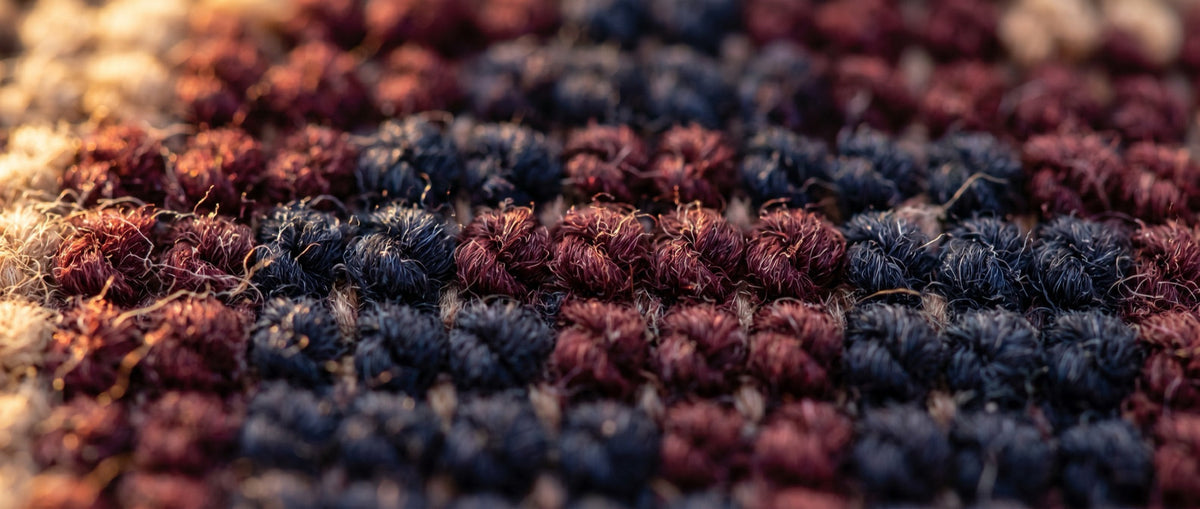
Authentic Oushak rugs are woven with hand-spun wool from local sheep breeds, producing fibers with natural lanolin content and exceptional softness. The Turkish (symmetrical) knot structure, combined with relatively low knot density (60-120 knots per square inch), creates textiles with remarkable flexibility and drape. This construction method, while less durable than ultra-fine Persian knotting, produces rugs ideally suited to residential foot traffic and furniture placement.
Cotton foundations provide structural stability, while wool pile heights typically range from 8-12mm, offering cushioning without excessive bulk. The combination of supple wool and moderate pile creates the distinctive tactile quality that makes Oushak rugs particularly comfortable underfoot—a practical consideration often overlooked in purely visual assessments.
19th Century Revival & European Influence
The 19th century witnessed renewed European interest in Oushak textiles, driven by Arts and Crafts movement appreciation for handcraft and William Morris's advocacy for traditional weaving techniques. This demand sparked production increases in Uşak and surrounding villages, with some design adaptations reflecting Victorian tastes for larger scales and bolder color contrasts.
Antique Oushak rugs from this period—now 100-150 years old—exhibit the desirable aged patina and color mellowing that collectors prize. These pieces often feature more elaborate border systems and denser floral fills than earlier examples, reflecting the influence of European decorative preferences on traditional Turkish design vocabulary.
Contemporary Oushak: Honoring Tradition in Modern Production
Contemporary Oushak-style rugs continue traditional weaving methods while adapting to current interior design requirements. Modern interpretations maintain hand-knotting techniques, natural wool fibers, and vegetable dye processes while offering custom sizing, color adjustments, and design variations suited to minimalist or transitional interiors. Reputable producers work with Turkish weaving cooperatives that preserve traditional skills while ensuring fair labor practices and material quality standards.
Distinguishing quality contemporary Oushak rugs requires evaluating wool softness, dye depth, and knotting consistency. Hand-spun wool exhibits slight irregularities that machine-spun yarn lacks, while vegetable dyes produce color complexity and aging characteristics impossible to replicate with synthetic colorants. Knot density should remain within traditional ranges—excessively fine knotting often indicates Persian-influenced production rather than authentic Oushak technique.
Collecting & Authentication: Evaluating Oushak Quality
Authenticating antique Oushak rugs requires expertise in dye analysis, wear patterns, and construction details. Natural vegetable dyes fade predictably with light exposure, creating the characteristic soft palette of genuine aged pieces. Synthetic dyes, introduced in the late 19th century, produce harsher color transitions and unnatural brightness even after decades of use. Foundation materials, knot structure, and selvage finishing provide additional authentication clues visible through close examination.
For contemporary purchases, provenance documentation, weaver cooperative information, and material certifications ensure quality and ethical production. Reputable dealers provide detailed information about wool sourcing, dye processes, and weaving timelines—transparency that distinguishes artisan-made textiles from commercial reproductions.
Interior Integration: Oushak Rugs in Contemporary Design
Oushak rugs' neutral palettes and spacious compositions make them exceptionally versatile in contemporary interiors. The soft terracotta, ivory, and blue tones complement both warm and cool color schemes, while the low visual contrast allows furniture and architectural elements to remain prominent. Designers frequently specify Oushak-style rugs for open-plan living areas, where their large-scale patterns define seating zones without overwhelming spatial flow.
The supple texture and moderate pile height suit high-traffic residential areas, dining rooms, and bedrooms where comfort underfoot matters as much as visual appeal. Unlike rigid, densely knotted rugs that resist furniture placement, Oushak textiles drape naturally around table legs and seating, creating the relaxed elegance characteristic of refined but livable interiors.
Explore our curated Oushak collection, featuring contemporary pieces woven using traditional techniques. Our artisan partnerships ensure direct access to the weavers at our workshop in Afghanistan. For guidance on selecting Oushak rugs suited to your interior, contact our design consultation services.
Discover Oushak rugs that honor centuries of Anatolian weaving tradition. Each piece in our collection represents hand-knotted craftsmanship, natural materials, and Oushak design heritage that brings timeless elegance to contemporary interiors.