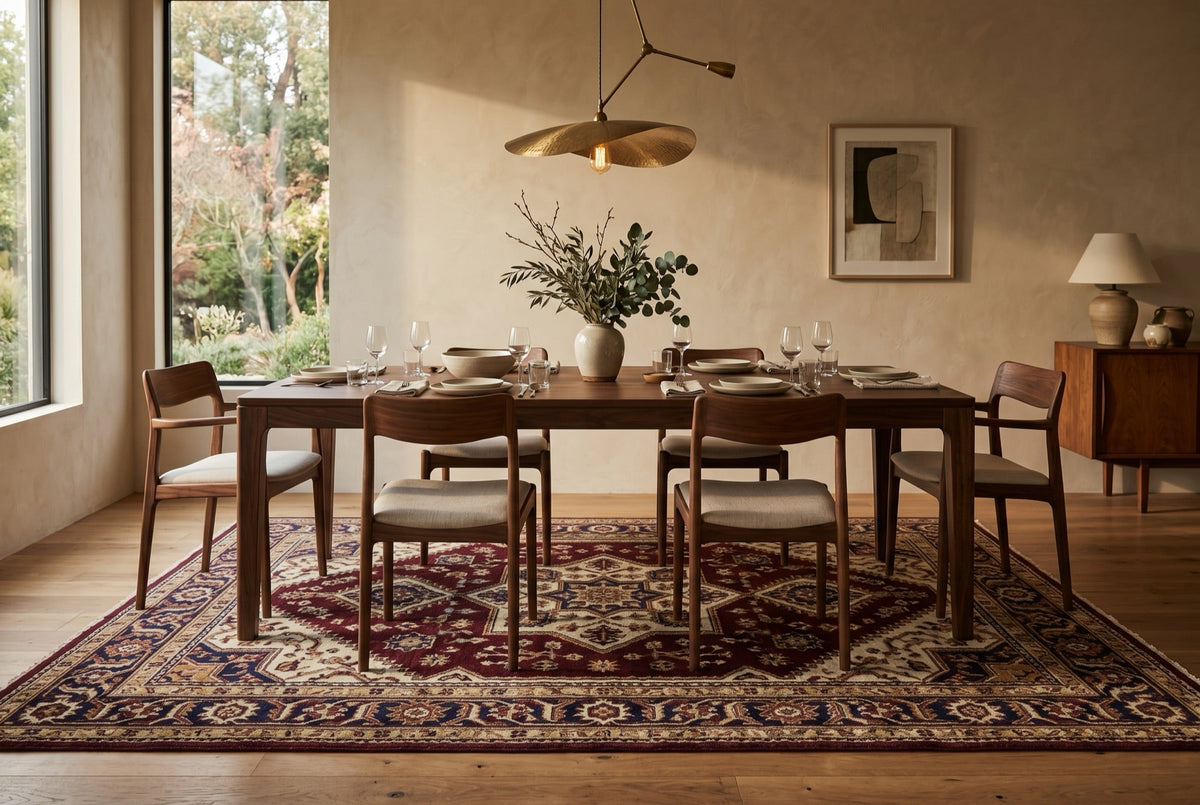
Quick answer: Persian rug history spans 2,500 years, but the modern collector’s reference points are seven regional traditions: Tabriz (curvilinear medallions, high knot density), Kashan (formal florals, deep reds), Heriz (geometric medallions on rust and indigo), Isfahan (silk-on-cotton court refinement), Qom (silk, miniature scale), Bijar (the densest knotting in Persia), and Nain (ivory grounds, restrained palette).
Persian rugs represent the pinnacle of hand-knotted textile artistry, embodying centuries of design refinement, technical mastery, and cultural significance that extends from ancient Persia through contemporary Iran. Distinguished by their intricate floral compositions, curvilinear motifs, and exceptional knotting density, Persian carpets have influenced global textile traditions and established the aesthetic standards by which luxury rugs are judged. Regional weaving centers—Tabriz, Isfahan, Kashan, Qum, Kerman, and Heriz—each developed distinctive design vocabularies, material preferences, and technical approaches that reflect local artistic traditions and patron demands. Understanding Persian rug history and regional characteristics provides essential knowledge for collectors, designers, and anyone seeking to appreciate these textiles as both functional art and cultural artifacts that anchor refined interiors with unparalleled craftsmanship.
Ancient Origins: Pazyryk Carpet to Safavid Court Production
The earliest known knotted carpet—the Pazyryk rug, dated to the 5th century BCE—was discovered in Siberian permafrost and demonstrates that sophisticated pile-weaving techniques existed in ancient Persia. This archaeological evidence confirms that Persian carpet weaving predates written documentation by centuries, with techniques passed through generations of artisan families and guild workshops.
Persian carpet production reached its artistic zenith during the Safavid dynasty (1501-1736), when royal patronage established court workshops in Isfahan, Kashan, and Kerman. These ateliers produced masterwork carpets featuring silk foundations, metal-wrapped threads, and designs created by court painters rather than weavers. Safavid carpets—now preserved in museums worldwide—established the floral medallion compositions, arabesque borders, and color harmonies that define classical Persian aesthetics.
Regional Styles: Tabriz, Isfahan & Kashan
Tabriz, in northwestern Iran, produces rugs characterized by fine knotting (200-400 knots per square inch), curvilinear floral designs, and the distinctive Herati pattern—a diamond medallion surrounded by fish motifs. Tabriz weavers employ the Turkish (symmetrical) knot despite Persian tradition favoring asymmetrical knotting, reflecting the city's position at the crossroads of Turkish and Persian cultural influences. Color palettes emphasize rich reds, navy blues, and ivory, with silk highlights adding luminosity to premium examples.
Isfahan rugs represent the height of Persian refinement, featuring extraordinarily fine knotting (300-500+ knots per square inch), silk or silk-blend foundations, and designs derived from Safavid court traditions. Central medallions surrounded by elaborate corner spandrels and multiple border systems create compositions of exceptional complexity and balance. Isfahan color palettes favor soft blues, ivory, and rose tones, with natural dye depth that produces the subtle color gradations prized by collectors.
Kashan carpets combine technical excellence with commercial appeal, offering fine knotting (200-300 knots per square inch) and traditional floral medallion designs in rich, saturated colors. Kashan weavers developed the distinctive Shah Abbas pattern—palmettes, cloud bands, and vase motifs—that became synonymous with classical Persian design. These rugs balance aesthetic sophistication with durability, making them popular choices for both residential and institutional applications.
Village & Tribal Traditions: Heriz, Hamadan & Bakhtiari
Heriz rugs, woven in villages near Tabriz, display bold geometric interpretations of floral medallions, rendered in saturated reds, blues, and ivory. The distinctive angular quality results from coarser knotting (60-120 knots per square inch) on cotton foundations, producing exceptionally durable textiles suited to high-traffic interiors. Heriz rugs offer Persian design heritage in more robust, graphic compositions that work effectively in contemporary and traditional settings.
Hamadan serves as a market center for numerous village weaving traditions, each with distinct characteristics. Hamadan-region rugs typically feature single-weft construction, camel-hair wefts, and geometric or stylized floral patterns in earthy palettes. These village pieces offer authentic Persian craftsmanship at more accessible price points than city workshop production.
Bakhtiari tribal rugs display distinctive garden panel designs—rectangular compartments filled with floral motifs—reflecting the nomadic tradition of portable garden imagery. Woven with hand-spun wool and natural dyes, Bakhtiari carpets combine tribal boldness with sophisticated color harmonies, creating textiles that bridge village and city aesthetic traditions.
Material Excellence: Wool, Silk & Natural Dyes
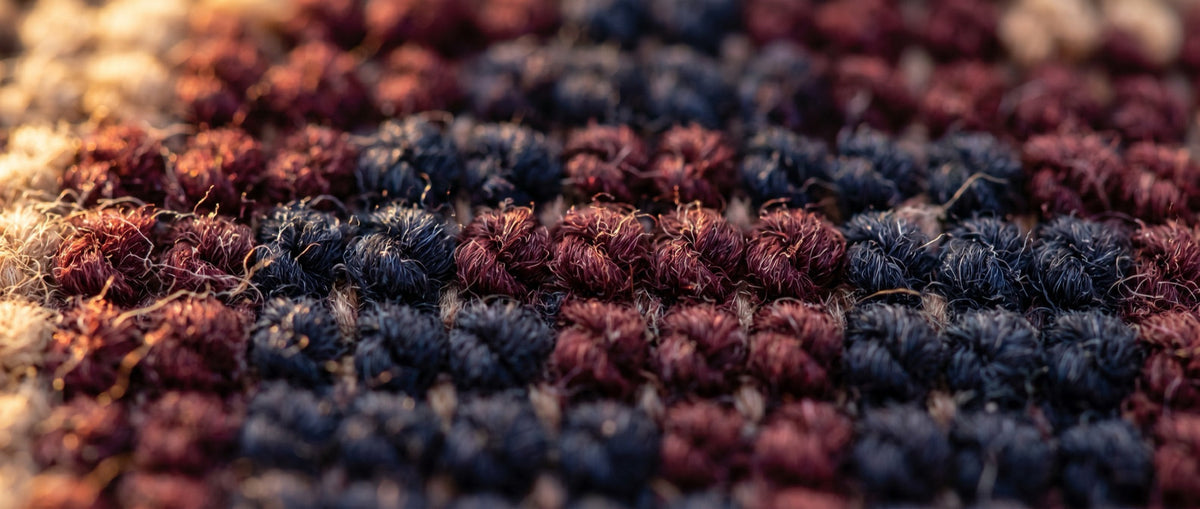
Persian rug quality begins with material selection. The finest examples use Kork wool—the soft undercoat from sheep shoulders—hand-spun to preserve natural lanolin and fiber strength. Silk foundations and pile threads appear in premium city workshop production, adding luminosity and allowing extremely fine knotting that captures intricate design detail. Cotton foundations provide dimensional stability for larger carpets while maintaining the flexibility necessary for proper drape.
Natural dyes remain central to Persian weaving tradition, with madder root producing the characteristic Persian reds, indigo creating deep blues, and combinations of plant materials generating the complex secondary colors that distinguish quality examples. Vegetable dyes age gracefully, mellowing into harmonious palettes that synthetic colorants cannot replicate. Dye quality assessment requires examining color depth, tonal variation, and the presence of abrash—natural color shifts within dye lots that authenticate handcraft production.
Knotting Techniques: Persian Asymmetrical Knot
Most Persian rugs employ the asymmetrical (Persian or Senneh) knot, which wraps around one warp thread and loops under the adjacent thread before emerging between them. This technique allows finer detail and more curvilinear designs than the symmetrical Turkish knot, enabling the intricate floral compositions characteristic of Persian aesthetics. Knot density varies by regional tradition and intended quality level, ranging from 60 knots per square inch in village production to 500+ in masterwork city carpets.
Knot count alone does not determine quality—wool quality, dye depth, design execution, and overall craftsmanship matter equally. Excessively fine knotting in contemporary production sometimes indicates machine assistance or compromised material quality, as authentic hand-knotting at extreme densities requires years of training and commands premium pricing that mass-market rugs cannot support.
Contemporary Persian Weaving: Tradition in Modern Iran
Contemporary Persian rug production continues in traditional weaving centers, though political and economic factors have affected both output and export availability. Modern Iranian weavers maintain classical designs and hand-knotting techniques while adapting to current market demands for custom sizing, color variations, and design modifications suited to Western interiors. Quality contemporary Persian rugs honor traditional aesthetics while offering the practical advantages of new textiles—clean foundations, intact pile, and warranties unavailable with antique examples.
Distinguishing quality contemporary Persian rugs requires evaluating wool softness, dye depth, knotting consistency, and design execution. Reputable dealers provide provenance documentation, weaver information, and material certifications that ensure authentic Iranian production rather than imitations from other countries attempting to replicate Persian aesthetics.
Collecting Persian Rugs: Authentication & Condition
Persian rug collecting requires expertise in regional identification, age assessment, and condition evaluation. Authentic examples display construction characteristics specific to their attributed origins—knot type, weft materials, selvage finishing, and design details that regional traditions dictate. Antique Persian rugs (100+ years old) command premium prices based on rarity, condition, and provenance, while semi-antique pieces (50-100 years) offer aged character at more accessible valuations.
Condition significantly affects value—original pile height, intact foundations, and unfaded colors increase desirability, while repairs, reductions, and color runs diminish market worth. Professional appraisals from certified rug specialists provide essential documentation for insurance and estate purposes.
Explore our curated Persian rug collection, featuring Persian-design pieces hand-knotted at our workshop in Afghanistan. Our artisan partnerships ensure access to authentic Persian weaving traditions and material excellence. For guidance on selecting Persian rugs suited to your interior, contact our design consultation services.
Discover Persian rugs that represent centuries of weaving mastery. Each piece embodies regional design heritage, natural materials, and hand-knotted craftsmanship that brings timeless elegance and cultural depth to refined interiors.