The Living Legacy of Turkish Rug Weaving
Turkish rugs represent one of the world's most enduring textile traditions, with weaving practices that span over 2,500 years across Anatolia. From nomadic tribal flatweaves to the refined court carpets of the Ottoman Empire, Turkish rug heritage embodies a continuous thread of craftsmanship, cultural identity, and artistic innovation.
Anatolian Weaving: Geography and Cultural Roots
The Anatolian plateau—modern-day Turkey—served as a crossroads of civilizations, where Seljuk, Byzantine, and Ottoman influences converged to shape distinctive regional weaving traditions. Each geographic region developed signature motifs, color palettes, and techniques that reflect local materials, tribal heritage, and trade route influences.
Regional Turkish Rug Traditions
Central Anatolia: Home to Konya, Kayseri, and Sivas, this region produced prayer rugs with geometric medallions and stylized floral motifs influenced by Seljuk architecture.
Western Anatolia: The Uşak and Bergama regions became renowned for bold, large-scale designs and vibrant natural dyes, with carpets that graced European palaces during the Renaissance.
Eastern Anatolia: Tribal communities in Kars and Van preserved ancient Caucasian weaving techniques, creating rugs with angular geometry and totemic symbols.
Ottoman Court Carpets: The Golden Age of Turkish Weaving
During the 15th to 17th centuries, Ottoman court workshops in Istanbul, Bursa, and Cairo elevated rug weaving to a fine art. Master weavers created monumental silk and wool carpets featuring intricate arabesque patterns, cloud bands, and garden motifs that symbolized paradise.
These imperial carpets were diplomatic gifts, appearing in Venetian paintings by Bellini, Lotto, and Holbein—so frequently that certain Turkish rug types are still identified by the European artists who depicted them.
Symbolism and Motifs in Turkish Rugs
Turkish rug designs carry deep cultural and spiritual meaning:
- Mihrab (prayer niche): Directional arch indicating Mecca in prayer rugs
- Tree of Life: Symbol of immortality and connection between earth and heaven
- Evil Eye (Nazar): Protective talisman woven into borders and corners
- Ram's Horn: Represents fertility, heroism, and male power
- Hands on Hips: Motherhood and femininity motif
Natural Dyes and Traditional Materials
Historic Turkish rugs achieved their luminous, enduring colors through natural dye sources:
- Madder root: Rich reds and terracotta tones
- Indigo: Deep blues from fermented plant leaves
- Weld and saffron: Golden yellows
- Walnut hulls: Warm browns
- Cochineal: Crimson and scarlet hues
Wool was hand-spun from local sheep breeds, with high-altitude flocks producing the finest, most lustrous fibers. Silk was reserved for court carpets and prayer rugs destined for mosques and palaces.
Turkish Weaving Techniques
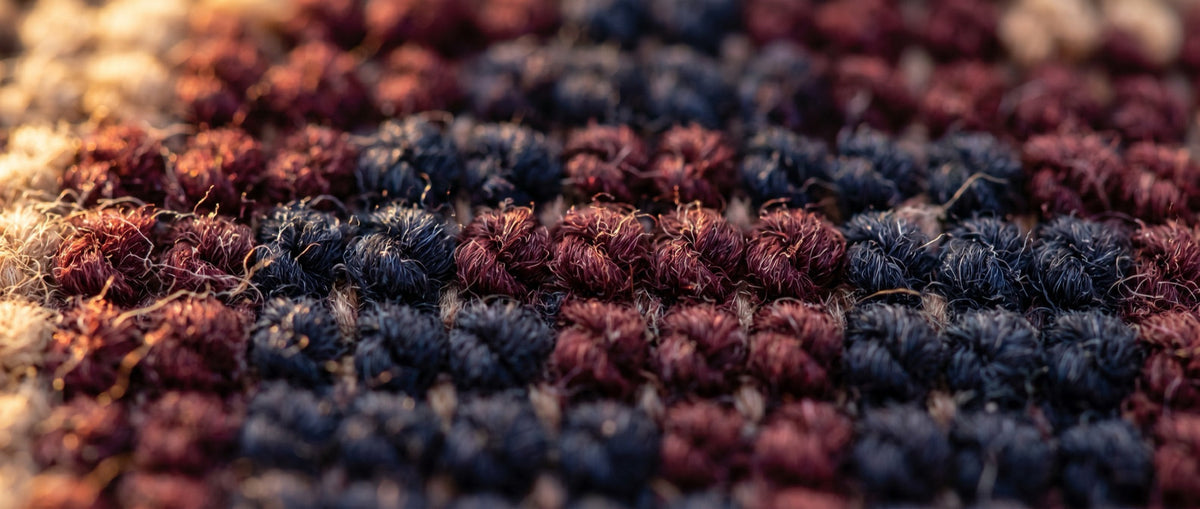
Turkish rugs are distinguished by the Ghiordes (Turkish) knot—a symmetrical knot that creates a denser, more durable pile compared to the asymmetrical Persian knot. This knotting method produces rugs with exceptional structural integrity and a characteristic upright pile.
Flatweave techniques—including kilim, cicim, and sumak—were perfected by nomadic tribes, creating reversible textiles that served as floor coverings, tent dividers, and storage bags.
The Decline and Revival of Turkish Rug Weaving
The introduction of synthetic dyes in the late 19th century and mass production in the 20th century threatened traditional Turkish weaving. However, a revival movement beginning in the 1980s—led by organizations like DOBAG (Natural Dye Research and Development Project)—restored natural dye practices and supported village weavers in continuing ancestral techniques.
Collecting Turkish Rugs: What to Look For
When evaluating Turkish rugs for authenticity and quality:
- Knot density: Antique Turkish rugs typically range from 60-200 knots per square inch
- Wool quality: Hand-spun wool has irregular texture and natural luster
- Natural dyes: Colors that soften and develop patina with age
- Structural integrity: Flat, even weave without buckling or warping
- Provenance: Regional attribution based on design, color, and technique
Turkish Rugs in Contemporary Interiors
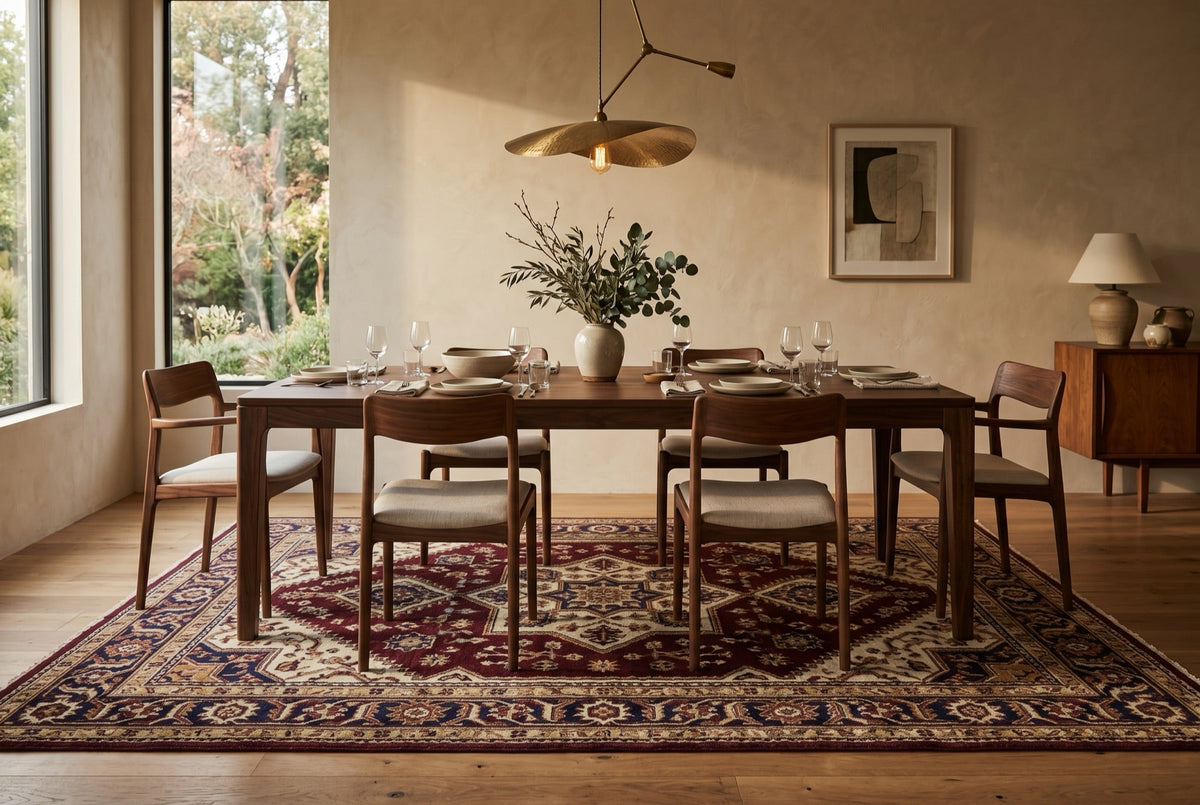
Turkish heritage rugs bring warmth, history, and cultural depth to modern spaces. Their geometric clarity complements minimalist interiors, while their rich color palettes anchor eclectic and maximalist rooms.
Preserving Turkish Weaving Traditions
Supporting authentic Turkish rug weaving means choosing pieces from ethical sources that compensate artisans fairly and preserve traditional methods. Each handwoven Turkish rug represents hundreds of hours of skilled labor and carries forward a cultural legacy that deserves recognition and protection.
At Raihan Rugs, we honor this heritage with Oushak-style rugs hand-knotted at our workshop in Afghanistan, each selected for condition and artistic merit.