Acquiring fine hand-knotted rugs requires the same connoisseurship applied to fine art or rare furniture—an understanding of material provenance, weaving lineage, and market rarity. Authentic luxury textiles are distinguished by hand-spun wool or silk foundations, natural dye palettes derived from madder root, indigo, and pomegranate, and knotting densities that reflect months or years of artisan labor. Whether evaluating a nineteenth-century Oushak, a contemporary Mamluk revival, or a minimalist Kilim flatweave, collectors must assess fiber quality, structural integrity, and design pedigree. This guide provides the technical and aesthetic criteria necessary to identify heirloom-quality pieces, avoid commercial reproductions, and build a textile collection that will last for decades.
Luxury Rug Guide: How to Choose Artful Foundations for Your Home
A luxury rug is not an accessory; it is a foundation. In the most considered interiors, rugs function as quiet architecture—anchoring furniture, shaping movement, and setting the emotional tone of a space. Chosen well, a luxury rug brings cohesion and depth, balancing form and function while expressing craft, heritage, and intention.
This guide explores how to select a luxury rug with confidence. From understanding construction and materials to selecting the correct size and palette, each section is designed to help you make informed decisions rooted in quality, longevity, and aesthetic clarity. Whether your preference leans toward Kilim flatweaves, refined European designs, or collector-grade Mamluk pieces, the principles below apply across traditions and styles.
What Defines a Luxury Rug
Luxury rugs are defined by how they are made and why they endure. Beyond visual appeal, they embody skilled labor, material integrity, and rarity—qualities that distinguish artisan rugs from mass-produced alternatives.
Craftsmanship
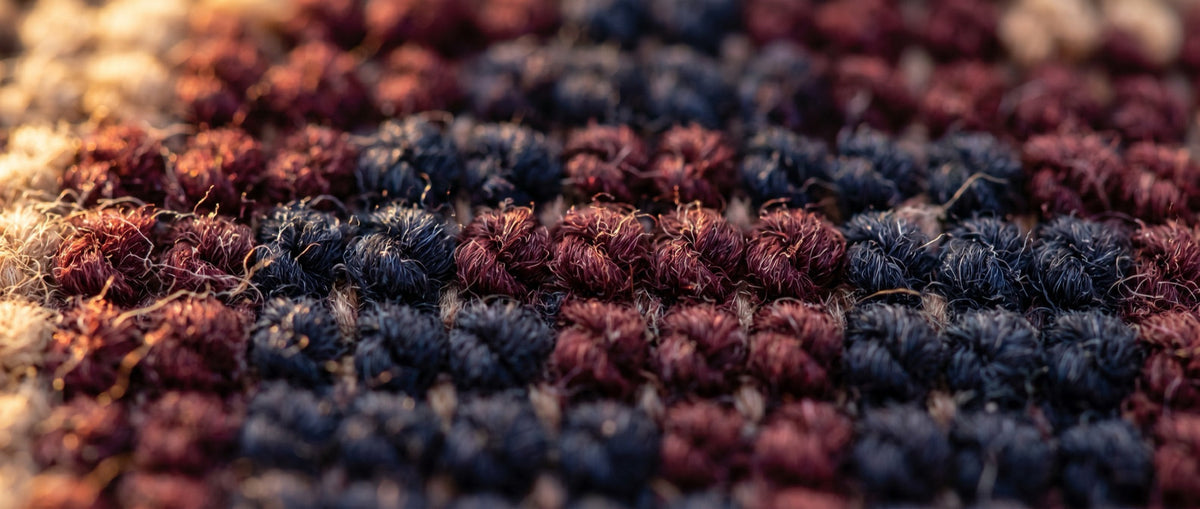
Handwoven rugs are created through time-intensive processes—knot by knot or pass by pass on a loom—requiring mastery passed down through generations. Subtle variations in weave and color are not imperfections; they are signatures of the human hand.
Explore our curated Oushak collection, where each piece is vetted for wool quality and natural dye authenticity
Materials
Natural fibers—wool, cotton, and silk—form the backbone of high-end rugs. These materials perform better over time, developing character rather than degrading. Their tactile quality and visual depth cannot be replicated synthetically.
Rarity
Handmade — no two are exactly alike. Many handmade rugs are singular expressions shaped by regional traditions and individual weavers.
Longevity
A luxury rug is designed to last. With proper care, handwoven rugs can remain beautiful for decades, often becoming heirlooms that outlive trends.
Explore curated examples in Shop Rugs to see how these qualities translate across styles.
Standard vs. Luxury Rug Comparison
| Feature | Standard Rug | Luxury Hand-Knotted Rug |
|---|---|---|
| Construction | Machine-made or power-loomed | Hand-knotted by master artisans (200-500+ knots per square inch) |
| Materials | Synthetic fibers, commercial wool blends | Hand-spun wool, silk, natural vegetable dyes |
| Production Time | Hours to days | 6-18 months per piece |
| Lifespan | 5-15 years with care | 50-100+ years with care |
| Design Integrity | Mass-produced patterns | Handmade — no two are exactly alike |
Considerations for Collectors
When acquiring fine hand-knotted textiles, evaluate these critical factors:
- Provenance documentation: Verify regional origin, weaving workshop, and approximate age through expert authentication
- Knot density: Higher knot counts (300+ KPSI) indicate superior craftsmanship and finer detail resolution
- Natural dye verification: Authentic vegetable dyes create depth and luminosity that synthetic dyes cannot replicate
- Condition assessment: Examine for repairs, color runs, moth damage, or structural weaknesses that affect value
- Market positioning: Research comparable sales through auction houses and specialist dealers to establish fair market value
Quality Indicators: What to Look For
Well-made hand-knotted rugs exhibit these hallmarks of excellence:
- Consistent tension: The rug lies flat without buckling, indicating even hand-knotting throughout
- Crisp pattern definition: Motifs display sharp edges and precise geometry, reflecting high knot density
- Natural luster: Hand-spun wool and silk create a subtle sheen that shifts with light and viewing angle
- Color complexity: Natural dyes produce multi-tonal depth with abrash (intentional color variation) that adds character
- Structural integrity: Selvage edges remain intact, fringe is original and secure, and the foundation shows no weakness
Understanding Rug Types
Luxury rugs span multiple traditions and constructions, each offering distinct benefits and design language.
Kilim Rugs
Kilim rugs are flatwoven textiles known for bold geometry and symbolic motifs. Originating across Anatolia, Central Asia, and the Caucasus, Kilims are lightweight, reversible, and deeply expressive. Their graphic patterns make them ideal focal points in modern and layered interiors.
For geometric precision and flatweave construction, consider handwoven Kilim rugs that showcase tribal design heritage."
Flatweave Rugs
Flatweave describes a construction method rather than a region. Scandinavian flatweaves, for example, emphasize restraint and balance, while other flatwoven styles showcase rhythm and repetition. Their low profile suits high-traffic areas and contemporary spaces.
Dhurrie Rugs
Dhurries are Indian flatweaves traditionally made from cotton or wool. They favor clean lines, stripes, and simplified geometry, offering versatility and ease without sacrificing craft.
Hand-Knotted Rugs
Hand-knotted rugs—such as Oushak, European, and Mamluk styles—feature a pile created by individual knots. This technique allows for intricate detailing, depth of color, and exceptional durability.
A focused selection of these constructions can be found within the Kilim, Flatweaves & Dhurries Collection.
Choosing the Right Rug Size
Scale is one of the most critical factors in achieving a refined interior. A luxury rug should relate proportionally to furniture and architecture, creating a sense of calm and cohesion.
Living Rooms
In living areas, rugs should anchor seating. Ideally, the front legs of sofas and chairs rest on the rug; in larger rooms, placing all furniture fully on the rug establishes a unified foundation.
Dining Rooms
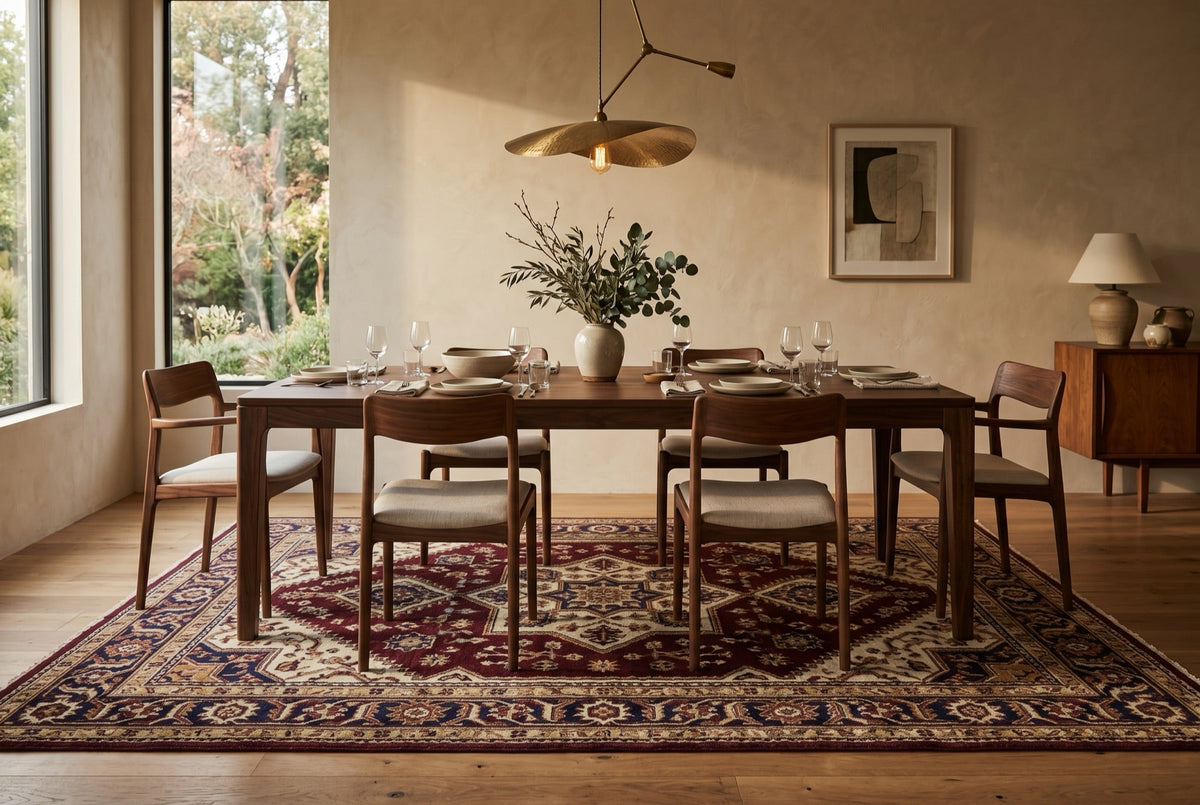
Dining room rugs must accommodate movement. The rug should extend at least 24 inches beyond the table on all sides so chairs remain on the rug when pulled out.
Bedrooms
In bedrooms, rugs typically extend beyond the bed to frame the space and soften circulation paths. Alternatively, runners along each side of the bed can work in narrower rooms.
Hallways and Transitional Spaces
Runners should follow the length of the corridor with equal margins on each side, elongating the space while maintaining balance.
For detailed diagrams and room-by-room guidance, consult the Rug Size Guide.
Our artisan partnerships ensure direct access to the weavers at our workshop in Afghanistan.
Materials That Matter
Materials influence not only appearance but also performance and longevity.
Wool
High-quality wool is resilient, naturally stain-resistant, and insulating. Hand-spun wool often displays subtle tonal variation, adding depth and character.
Cotton
Cotton is frequently used in flatweaves and as a structural element in foundations. It contributes flexibility and a lighter feel, especially suited to casual and contemporary settings.
Silk
Silk introduces luster and fine detail. Used selectively, it enhances motifs and creates visual contrast within more complex designs.
Natural fibers age gracefully, maintaining integrity and comfort over time.
Craftsmanship & Construction
Construction determines how a rug looks, feels, and performs across decades of use.
Handwoven rugs exhibit:
-
Consistent tension and balanced proportions
-
Clean edges and stable foundations
-
Depth of color achieved through natural dyes
-
A pliable, organic hand underfoot
Examining the back of a rug often reveals its authenticity. Handcrafted pieces display structure and clarity that machine-made rugs cannot replicate.
This level of workmanship is central to the ethos behind artisan rugs and remains a defining hallmark of luxury.
Color, Pattern & Interior Harmony
Luxury rugs should converse with their surroundings rather than compete with them.
Color
Neutral palettes create longevity and adaptability, while controlled use of saturated hues can energize minimalist spaces. Natural dyes tend to mellow beautifully with time.
Pattern
Large-scale patterns suit expansive rooms, while finer motifs complement intimate spaces. Geometry can bring structure; organic forms can soften architecture.
Harmony
Consider light, texture, and existing materials—wood, stone, metal—when selecting a rug. The goal is coherence, not dominance.
Curated luxury rugs for home are chosen with these relationships in mind, ensuring balance across varied interiors.
Care & Longevity
Proper care preserves both beauty and structure.
-
Vacuum regularly using suction only
-
Rotate rugs periodically to encourage even wear
-
Blot spills immediately with a clean, dry cloth
-
Use professional cleaning services experienced with handwoven rugs
Thoughtful maintenance allows rugs to mature gracefully. For best practices and service recommendations, refer to Rug Care & Guarantee.
Why Choose a Luxury Rug
A luxury rug offers more than aesthetics.
Timeless Design
Handcrafted rugs transcend trends, remaining relevant across evolving interiors.
Durability
Quality materials and construction ensure resilience in daily life.
Character
Subtle irregularities and natural aging add richness rather than detract from appearance.
Longevity
A well-chosen rug can serve generations, becoming part of a home's narrative.
Understanding how to choose a luxury rug is ultimately about aligning craftsmanship, scale, and intention—resulting in a piece that elevates both space and experience
Frequently Asked Questions
What makes a rug luxury?
Luxury rugs are defined by hand craftsmanship, natural materials, rarity, and long-term durability.
Are handwoven rugs worth the cost?
Yes. Handwoven rugs offer superior construction and age gracefully when properly cared for.
How long do luxury rugs last?
With appropriate maintenance, high-quality rugs can last decades or longer.
Are flatweave rugs durable?
Handwoven flatweaves are highly durable and well-suited to active spaces.
How do I choose the right rug size?
Select a size that anchors furniture and relates proportionally to the room; when uncertain, opt for a larger scale.