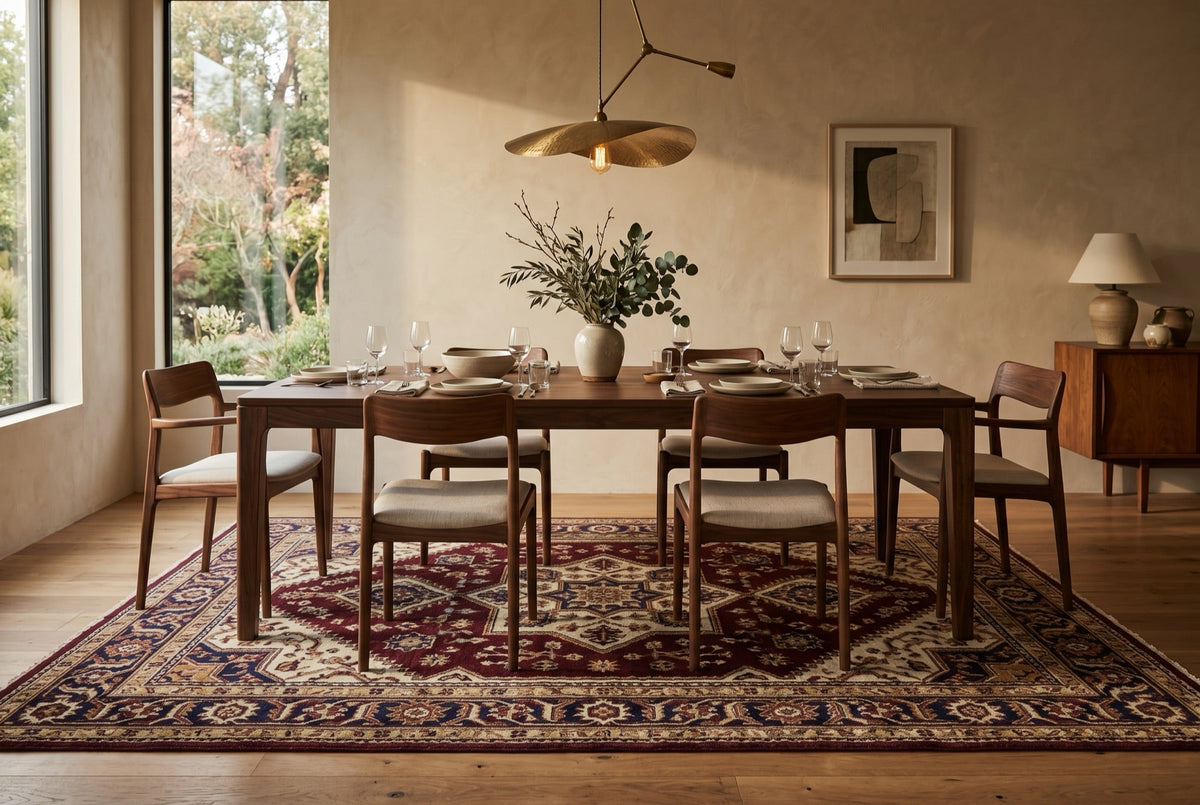
Handwoven rugs displayed as wall art represent one of the most sophisticated approaches to interior decoration, transforming vertical surfaces into expressions of textile heritage, artisan craftsmanship, and material authenticity. Unlike mass-produced prints or generic wall hangings, antique and contemporary rugs offer dimensional texture, natural fiber warmth, and cultural narratives that elevate interiors beyond conventional decoration into curated environments reflecting connoisseurship and design intelligence. Historically, textiles served as primary wall coverings in palaces, estates, and ceremonial spaces across Persian, Ottoman, and European traditions—a practice that contemporary luxury interiors revive through handwoven rug installations. Understanding how to select, mount, and integrate handwoven textiles as wall decor requires knowledge of scale relationships, material preservation, and the spatial dynamics that distinguish refined interiors from merely decorated rooms. This guide provides the technical and aesthetic framework for transforming handwoven rugs into architectural focal points that anchor sophisticated living spaces.
Wall Decor in Luxury Interiors: Architectural Function Beyond Ornament
In refined residential design, wall decor functions as an architectural layer that establishes visual hierarchy, balances spatial proportions, and introduces material contrast essential to sophisticated interiors. Effective wall treatments guide sight lines, define zones within open-plan spaces, and provide textural relief against smooth plaster or painted surfaces. Unlike furniture or lighting that serve obvious functional roles, wall decor operates subtly—its success measured by how seamlessly it integrates into overall composition rather than how boldly it announces presence.
High-quality wall decor in luxury contexts delivers multiple functions: acoustic dampening in hard-surface rooms, visual warmth in minimalist spaces, and cultural depth in interiors seeking narrative beyond contemporary furnishings. Handwoven textiles excel in these roles, offering organic texture through natural wool fibers, dimensional depth from pile construction, and the visual complexity that only artisan production achieves. Where framed prints provide flat color and pattern, textile wall installations introduce sculptural presence and tactile richness that photographs and paintings cannot replicate.
Why Handwoven Rugs Elevate Wall Decor Beyond Conventional Art
Handwoven rugs as wall decor offer qualities unavailable through traditional artwork: three-dimensional texture from pile construction, material authenticity through natural fibers and vegetable dyes, and cultural provenance connecting contemporary interiors to centuries-old weaving traditions. A Persian Tabriz rug mounted above a console carries design sophistication and historical significance that generic wall art cannot approach—it represents months of artisan labor, traditional motifs with symbolic meaning, and material quality that improves rather than degrades over decades.
Textile wall installations provide acoustic benefits particularly valuable in contemporary interiors dominated by hard surfaces—glass, stone, polished concrete. Wool fibers absorb sound frequencies that reflect off smooth walls, reducing echo and creating more comfortable acoustic environments. This functional advantage complements aesthetic impact, making rug wall decor both beautiful and practical in open-plan living areas, dining rooms, and bedrooms where sound control enhances livability.
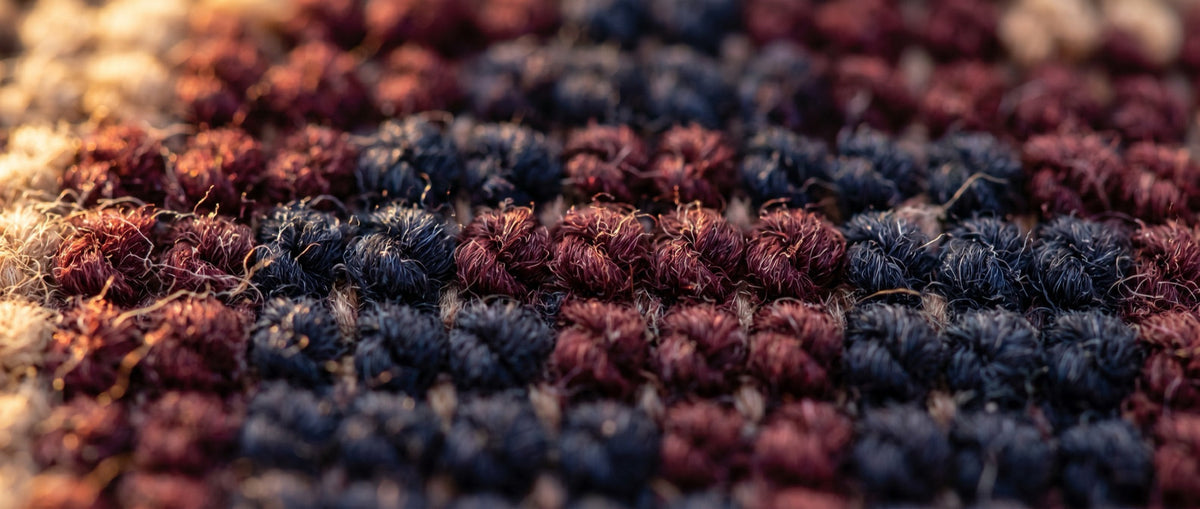
The organic irregularities inherent to handwoven textiles—slight color variations from natural dyes, subtle pattern asymmetries from individual weaver interpretation, dimensional texture from hand-knotting—create visual interest that machine-perfect prints lack. These characteristics authenticate artisan production and provide the depth that luxury interiors require to avoid the sterile quality of overly controlled design.
Explore our handwoven rug collection featuring pieces suitable for wall display, including Kilims, Persian-design rugs, and Oushak-style textiles with the scale and design presence ideal for vertical installation.
Selecting Rugs for Wall Decor: Scale, Pattern & Material Considerations
Rug selection for wall display requires different criteria than floor applications. Wall-mounted textiles must relate to furniture scale and room proportions while remaining visually light enough to avoid overwhelming vertical surfaces. Larger rugs (6x9 to 8x10 feet) work as statement pieces above sofas, beds, or console tables, anchoring seating arrangements and defining spatial zones. Smaller rugs (4x6 to 5x7 feet) suit hallways, powder rooms, or vertical groupings where multiple textiles create gallery-style installations.
Pattern density and color intensity affect visual weight: intricate Persian florals with polychrome palettes command attention and suit formal spaces, while spacious Oushak compositions in muted tones integrate quietly into minimalist interiors. Geometric Kilim flatweaves offer graphic impact with minimal physical weight, making them ideal for wall mounting where structural load matters. Consider the room's existing visual complexity—busy interiors benefit from simpler textile patterns, while neutral spaces can accommodate more elaborate designs.
Material and construction influence both aesthetic and practical suitability for wall display. Flatweave Kilims and low-pile rugs mount more easily than high-pile pieces, with lighter weight reducing structural demands on mounting systems. Antique textiles with fragile foundations require professional conservation mounting that distributes weight evenly and prevents stress damage. Contemporary rugs with intact foundations and full pile offer durability advantages and require less specialized installation than delicate vintage pieces.
Color Harmony: Integrating Textile Wall Decor into Existing Palettes
Wall decor should complement rather than compete with existing interior color schemes. In luxury design, textiles function as bridge elements that connect furniture, architectural finishes, and accent colors into cohesive compositions. Earth tones—terracotta, ochre, warm browns—integrate seamlessly into spaces with wood furnishings and natural materials. Cool palettes featuring indigo, soft blues, and grays suit contemporary interiors with metal accents and stone surfaces. Neutral textiles in ivory, taupe, and soft grays provide grounding without color commitment, allowing furniture and art to remain focal points.
Vegetable-dyed rugs offer color complexity that synthetic dyes cannot replicate—multiple tonal values within single color areas create depth and prevent the flat appearance of uniform hues. This natural color variation helps textiles integrate into varied lighting conditions, appearing different in morning daylight versus evening artificial light. The mellowed palettes of vintage rugs prove particularly versatile, their aged colors harmonizing with both traditional and contemporary furnishings.
Material Integrity: Why Natural Fibers Matter in Wall Decor
Material choice defines both aesthetic quality and long-term performance of textile wall decor. Wool textiles offer warmth, durability, and the organic texture essential to luxury interiors. Hand-spun wool retains natural crimp and irregularity that creates visual depth, while natural lanolin provides inherent soil resistance even in wall applications where dust accumulation occurs. Silk rugs introduce luminosity and fine detail but require careful light management to prevent photodegradation—reserve silk pieces for walls without direct sun exposure.
Natural vegetable dyes age gracefully, mellowing into harmonious tones rather than fading harshly like synthetic colorants. This aging characteristic proves advantageous in wall applications where textiles remain visible continuously—the gradual color evolution adds character rather than appearing as deterioration. Madder reds soften to terracotta, indigo blues mellow to sky tones, and saffron yellows fade to buttery ivories, all creating the patina that collectors prize.
Handcrafted fibers introduce authenticity and human scale into interiors increasingly dominated by industrial materials and machine-perfect finishes. The slight irregularities of hand-spun wool, the dimensional variation of hand-knotting, and the color shifts of batch-dyed fibers provide visual interest that mass-produced decor cannot achieve. These qualities distinguish luxury wall treatments from commercial alternatives.
Learn more about our artisan partnerships and the traditional weaving techniques that create textiles suited to wall display.
Room-Specific Wall Decor Placement Strategies
Living Rooms: Creating Focal Points Above Seating
Living room wall decor should anchor seating arrangements and establish visual hierarchy. A single large textile piece (6x9 to 8x10 feet) mounted above a sofa creates a focal point that grounds the room and provides backdrop for furniture groupings. Position the rug so its lower edge sits 8-12 inches above sofa back height, maintaining visual connection between furniture and wall treatment. Ensure adequate clearance from ceiling—18-24 inches minimum—to prevent the cramped appearance that occurs when wall decor extends too close to architectural boundaries.
In double-height living spaces, oversized textiles (9x12 or larger) can fill vertical expanses that standard artwork cannot address. These installations require professional mounting systems capable of supporting substantial weight while distributing stress to prevent foundation damage. Consider lighting: directional spotlights or picture lights enhance textile texture and pattern while creating dramatic evening ambiance.
Bedrooms: Reinforcing Calm Through Textile Softness
Bedroom wall decor should support restful environments through soft textures and restrained palettes. Mount textiles above bed headboards as alternatives to traditional headboard upholstery, creating visual interest without the bulk of furniture. Smaller rugs (4x6 to 5x7 feet) suit standard queen beds, while king beds accommodate 6x9 pieces. Muted colors—soft blues, warm grays, ivory tones—promote calm better than saturated or high-contrast patterns.
Textile wall installations provide acoustic benefits particularly valuable in bedrooms, absorbing sound that hard surfaces reflect and creating quieter sleeping environments. The organic texture of wool adds visual warmth without the visual stimulation that busy patterns or bright colors introduce—essential for spaces prioritizing rest over visual excitement.
Hallways & Transitional Spaces: Guiding Movement with Vertical Installations
Hallway wall decor enhances circulation spaces that often receive minimal design attention. Vertical textile installations—runners mounted lengthwise or multiple smaller rugs arranged in gallery groupings—add visual interest to narrow passages while guiding movement through transitional areas. The dimensional texture of handwoven pieces prevents hallways from appearing as mere connectors, elevating them into designed spaces worthy of the same attention as primary rooms.
In transitional spaces, wall decor provides opportunities for bolder pattern and color than conservative primary rooms might accommodate. Geometric Kilims, tribal pieces with saturated colors, or vintage textiles with aged patinas introduce personality and cultural depth without overwhelming living areas where visual calm takes priority.
Mounting Systems: Protecting Textiles While Ensuring Secure Installation
Proper mounting protects textile integrity while ensuring secure, level installation. Velcro mounting systems distribute weight evenly across rug width, preventing stress concentration that damages foundations. Sew a Velcro strip (hook side) to a fabric backing board, then attach the corresponding Velcro strip (loop side) to the rug's upper edge using conservation-grade thread. Mount the backing board to wall studs or use appropriate wall anchors for plaster or drywall applications.
Avoid nails, tacks, or rod-pocket installations that concentrate stress at specific points and create permanent holes in textile foundations. These methods cause irreversible damage and compromise structural integrity. For valuable antique pieces, consult textile conservators who can design custom mounting solutions that preserve fragile textiles while allowing safe display.
Ensure adequate wall support: textiles weighing 20+ pounds require mounting to wall studs or heavy-duty anchors rated for the specific wall material. Plaster walls, common in older homes, need specialized anchors different from drywall applications. When in doubt, consult professional installers experienced with textile art to prevent installation failures that damage both walls and rugs.
Light Management: Preventing Photodegradation in Wall-Mounted Textiles
Light exposure represents the primary threat to textile longevity in wall applications. Direct sunlight causes photodegradation—fiber weakening and color fading—that proves irreversible once damage occurs. Position wall-mounted rugs away from windows receiving direct sun, or use UV-filtering window treatments that block harmful wavelengths while allowing visible light transmission. Museum standards limit textile light exposure to 50-150 lux, though residential applications typically accept higher levels with understanding that some fading will occur over decades.
Artificial lighting offers more control: LED fixtures produce minimal UV radiation and heat compared to incandescent or halogen alternatives, making them safer for textile illumination. Position spotlights or picture lights to graze textile surfaces at oblique angles, enhancing texture and pattern while minimizing direct exposure that accelerates fading. Consider installing dimmer switches that allow light level adjustment based on time of day and usage patterns.
Rotate wall-mounted textiles periodically—every 2-3 years—to ensure even light exposure and prevent directional fading. This practice proves particularly important for pieces in high-light locations where photodegradation occurs more rapidly. Store rotated textiles properly: rolled around acid-free tubes, wrapped in unbleached muslin, in climate-controlled environments free from temperature fluctuations and pest access.
Climate Control: Humidity & Temperature Management for Textile Preservation
Stable environmental conditions extend textile life and preserve appearance. Maintain indoor humidity between 45-55%—levels below 40% cause fiber brittleness and foundation cracking, while humidity above 60% promotes mold growth and dye bleeding. Use humidifiers in dry winter climates and dehumidifiers in humid summer conditions to maintain consistent levels. Avoid mounting textiles on exterior walls in humid climates where temperature differentials cause condensation that damages fibers.
Temperature stability matters as much as absolute temperature: fluctuations stress fibers and accelerate aging. Maintain consistent temperatures (65-72°F) year-round, avoiding dramatic seasonal swings that cause expansion and contraction cycles damaging to textile foundations. Keep wall-mounted rugs away from heating vents, fireplaces, and air conditioning registers where direct airflow causes localized drying or moisture exposure.
Maintenance: Dust Management & Professional Cleaning
Wall-mounted textiles accumulate dust requiring periodic removal to maintain appearance and prevent fiber abrasion. Vacuum gently using soft brush attachments and low suction settings, working from top to bottom in the direction of pile. Perform this maintenance quarterly or as needed based on household dust levels and air quality. Avoid feather dusters that redistribute rather than remove dust, and never beat or shake wall-mounted textiles—these actions stress foundations and can cause structural damage.
Professional cleaning every 5-7 years removes embedded soil and refreshes appearance. Seek textile conservators or rug specialists experienced with wall-mounted pieces—cleaning requirements differ from floor rugs due to different soiling patterns and the need to maintain mounting hardware. Inform cleaners about mounting methods to ensure proper handling and reinstallation after cleaning.
Why Handwoven Wall Decor Transcends Design Trends
Design trends cycle through decades, but handwoven textile quality remains constant. A well-chosen rug mounted as wall decor provides enduring beauty independent of temporary aesthetic preferences—its value derives from material excellence, artisan craftsmanship, and cultural authenticity rather than alignment with current color palettes or pattern trends. This permanence makes textile wall installations sound long-term design choices that improve interiors across ownership periods and style evolutions.
Handwoven pieces carry regional identity and weaving heritage that connect contemporary interiors to centuries-old traditions. A Turkish Oushak or Persian Tabriz mounted as wall art introduces cultural depth and historical narrative that mass-produced decor cannot provide. These textiles become conversation pieces and family heirlooms, their stories and provenance adding meaning beyond visual appeal.
The material honesty of natural fibers, vegetable dyes, and hand-knotted construction offers authenticity increasingly rare in contemporary interiors dominated by synthetic materials and industrial production. This authenticity resonates with design philosophies valuing sustainability, artisan support, and the preservation of traditional craft knowledge—values that transcend temporary trends and align with long-term cultural and environmental responsibility.
Wall Decor as Architectural Expression: Integration Over Decoration
Exceptional wall decor elevates interiors through integration rather than decoration—it becomes part of architectural composition rather than applied ornament. Handwoven textiles achieve this integration through scale relationships that respect room proportions, color harmonies that support existing palettes, and material authenticity that complements rather than competes with furnishings and finishes. The result is interiors where wall treatments feel inevitable rather than arbitrary, essential rather than optional.
This approach requires restraint: fewer, better pieces rather than comprehensive wall coverage. In luxury design, negative space matters as much as filled areas—empty walls provide visual rest and allow featured textiles to command attention without competition. Consider wall decor as punctuation in spatial composition: strategic emphasis that guides experience and creates memorable moments within overall interior narrative.
When chosen with connoisseurship and installed with care, handwoven rugs as wall decor transform vertical surfaces into expressions of cultural appreciation, material intelligence, and design sophistication. They anchor refined interiors with quiet authority, adding depth and meaning that transcends mere decoration to become architectural expression.
Explore Kilim flatweaves and Oushak textiles particularly suited to wall installation. Contact our design consultation services for guidance on selecting and mounting handwoven rugs as wall decor in your interior.
Discover handwoven textiles that transform walls into expressions of artisan heritage and material authenticity. Each piece represents traditional craftsmanship and design intelligence that elevates refined interiors with enduring beauty and cultural depth.