 One of one
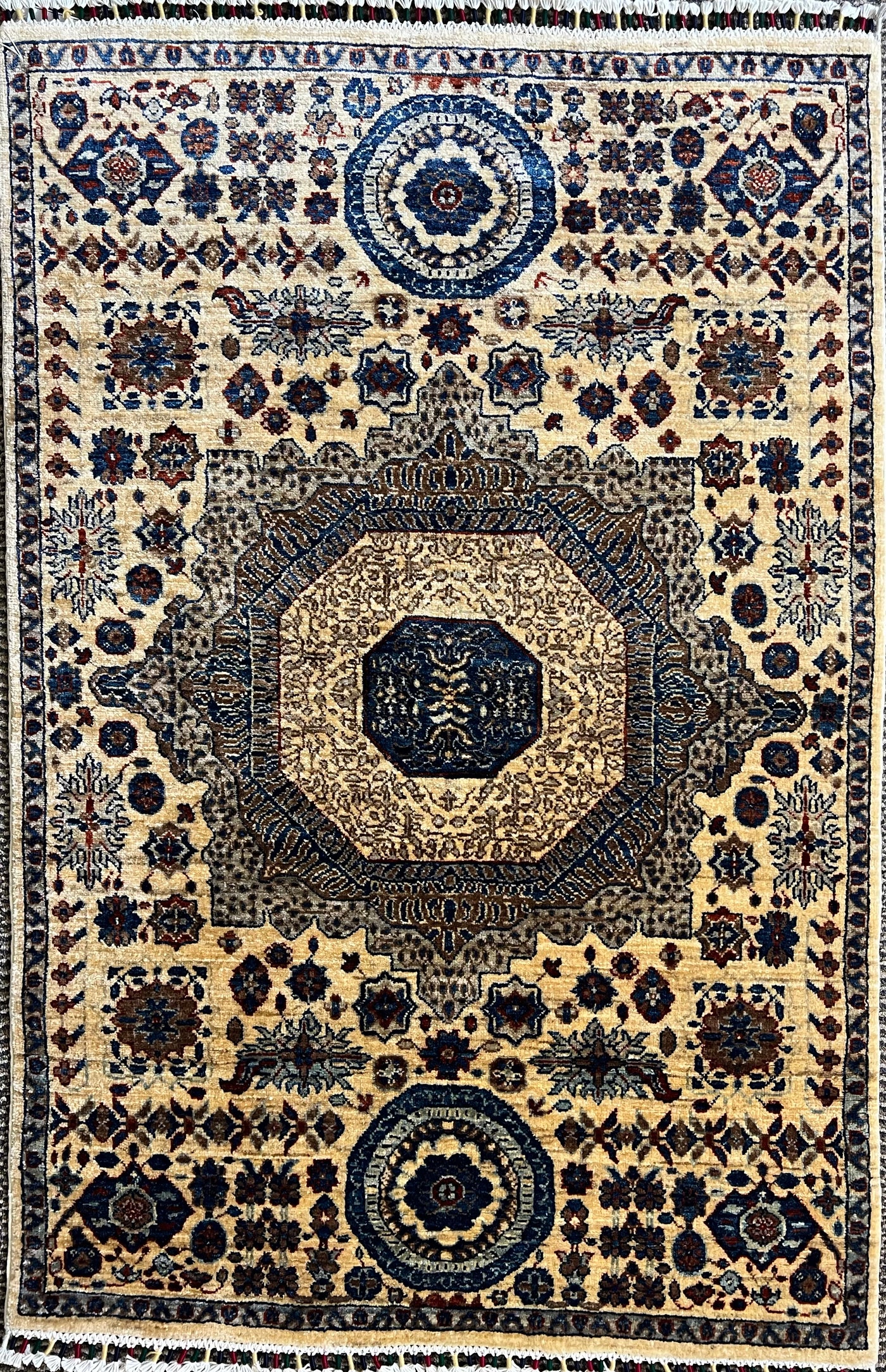
Mamluk Hand-Knotted Wool Rug – 5'1" × 3'5"
$1,550.00
Free white-glove U.S. shipping · 14-day home trial · Call or text +1 857 313 9458
Hand-knotted · One of one · Boston-curated
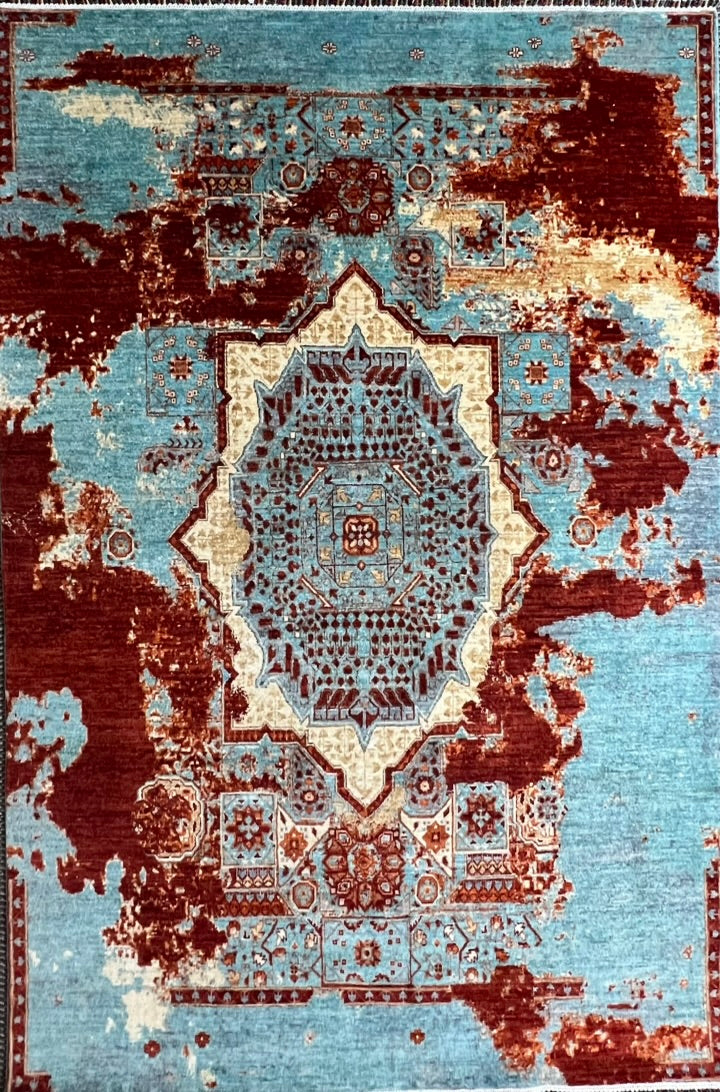
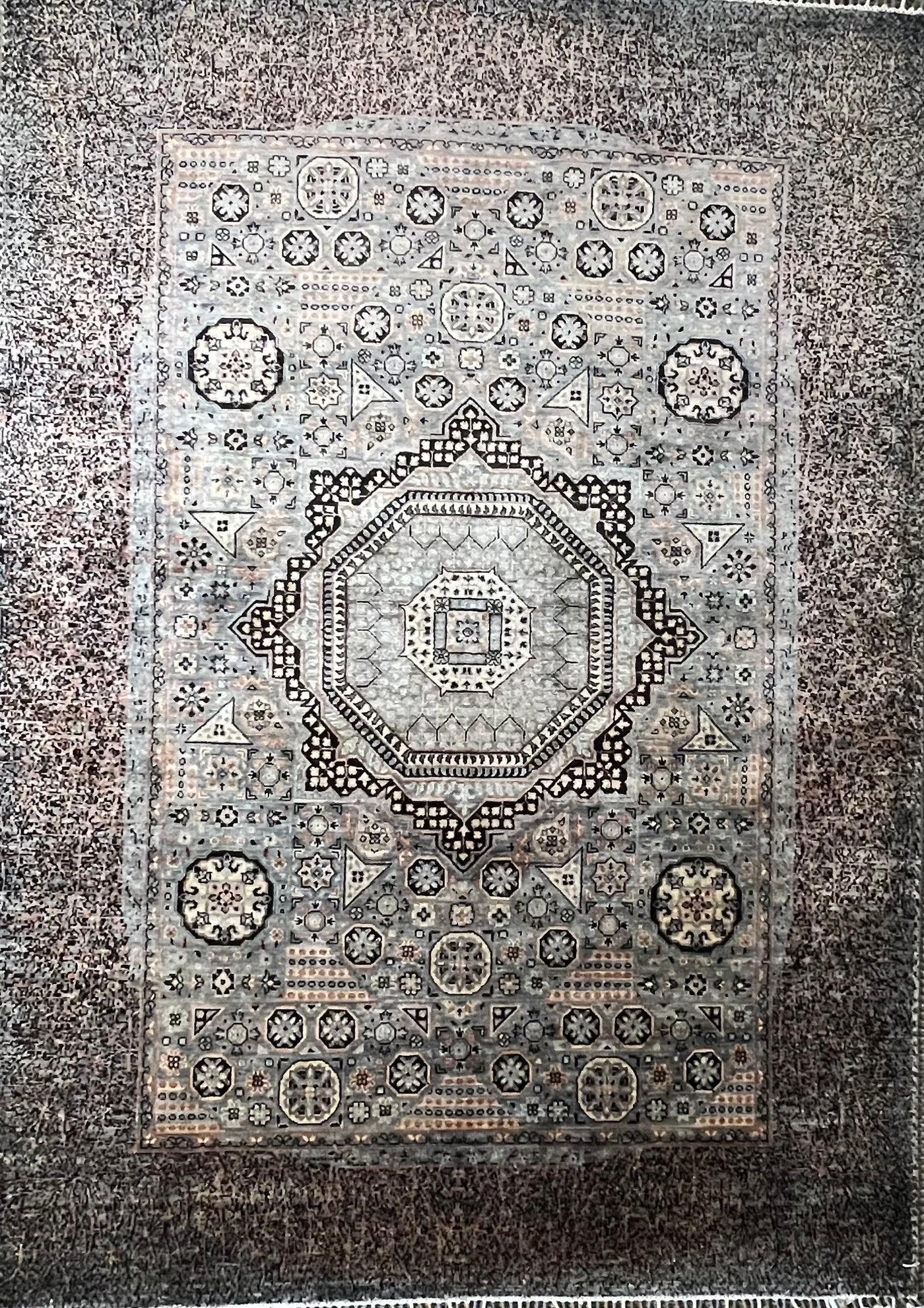
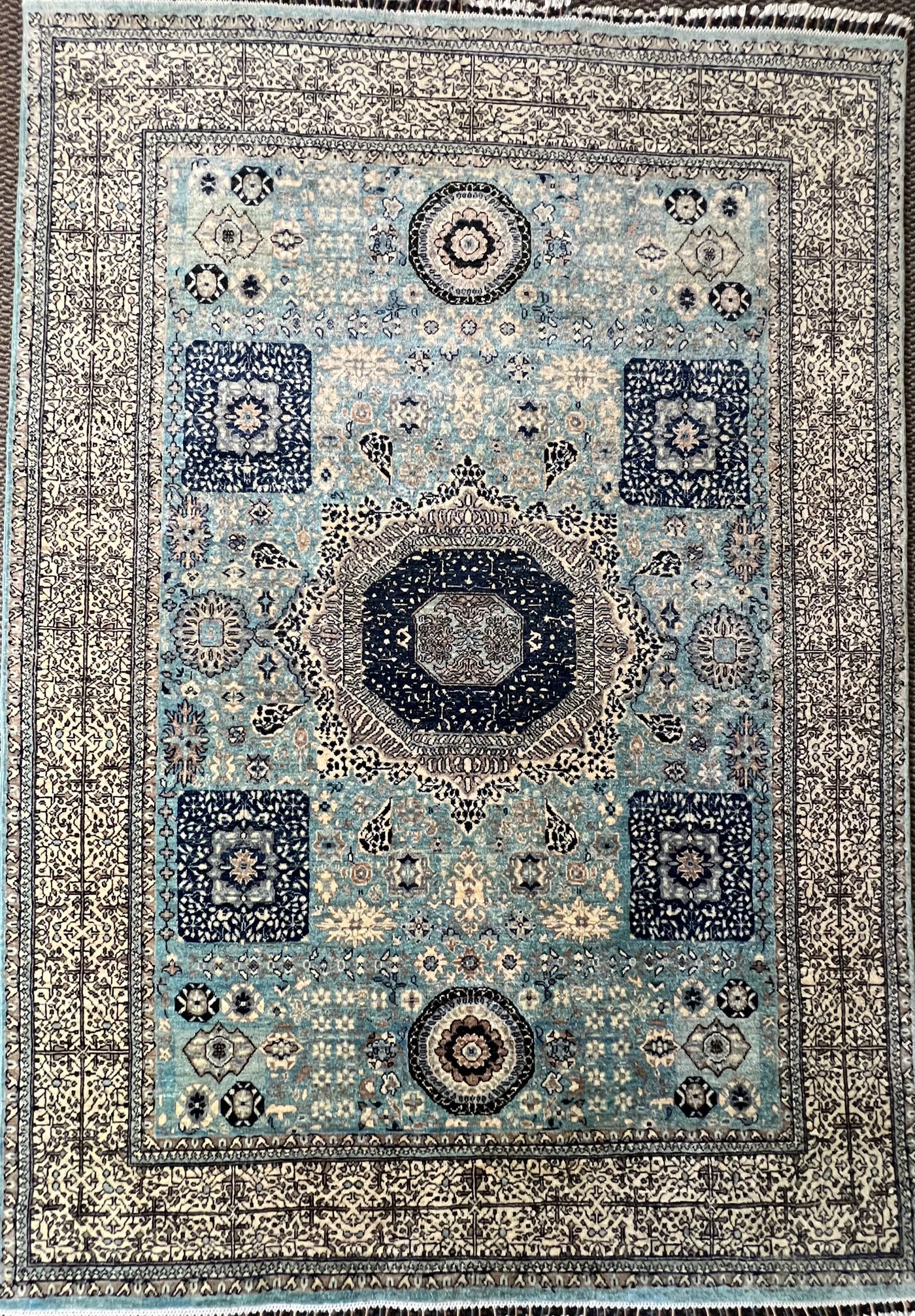
Hand-knotted Mamluk rugs — the formal, geometric school of weaving that emerged in 15th-century Cairo and remains one of the most architecturally precise rug traditions in the world. Every piece in this collection is hand-knotted and hand-inspected.
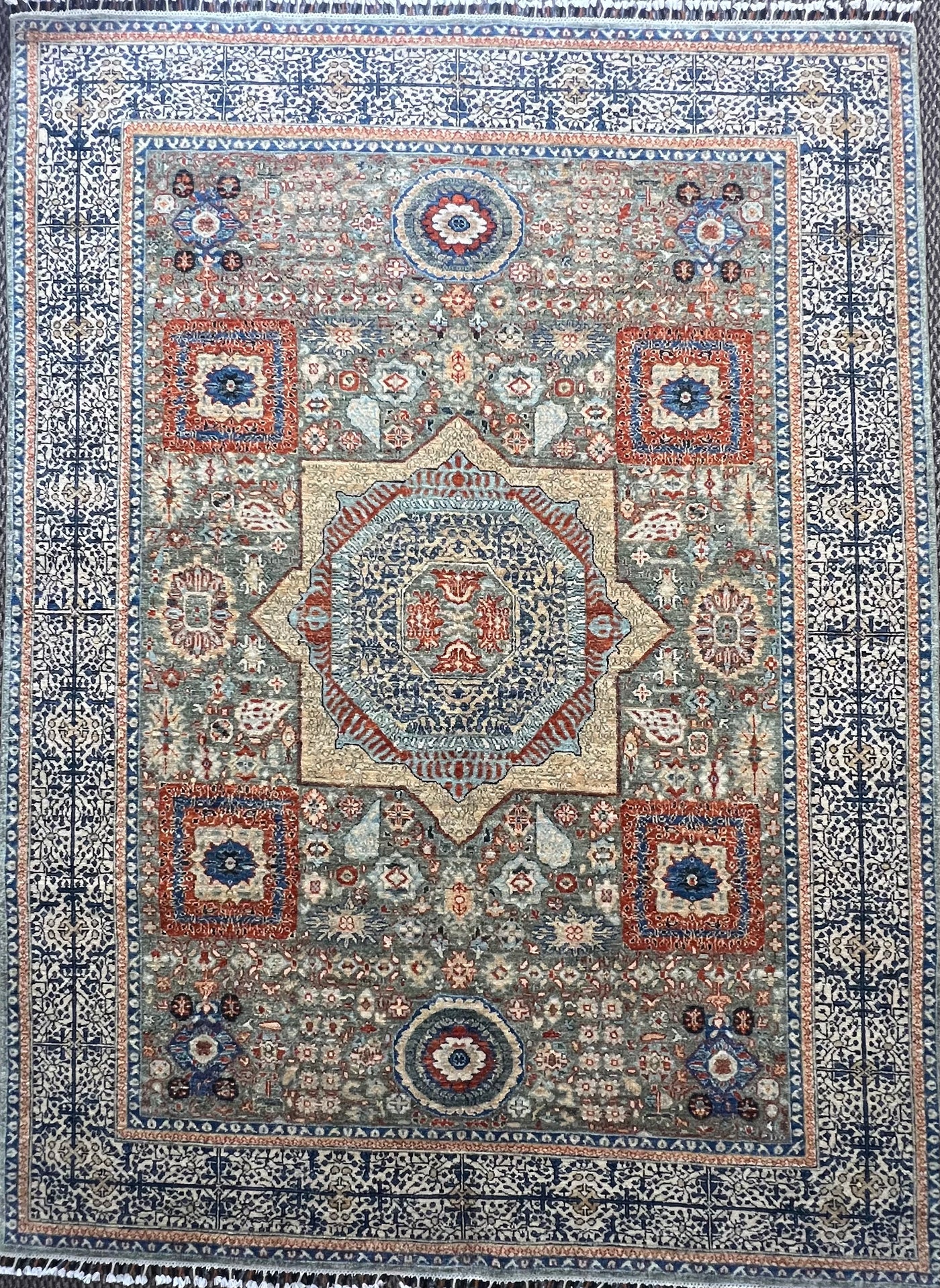
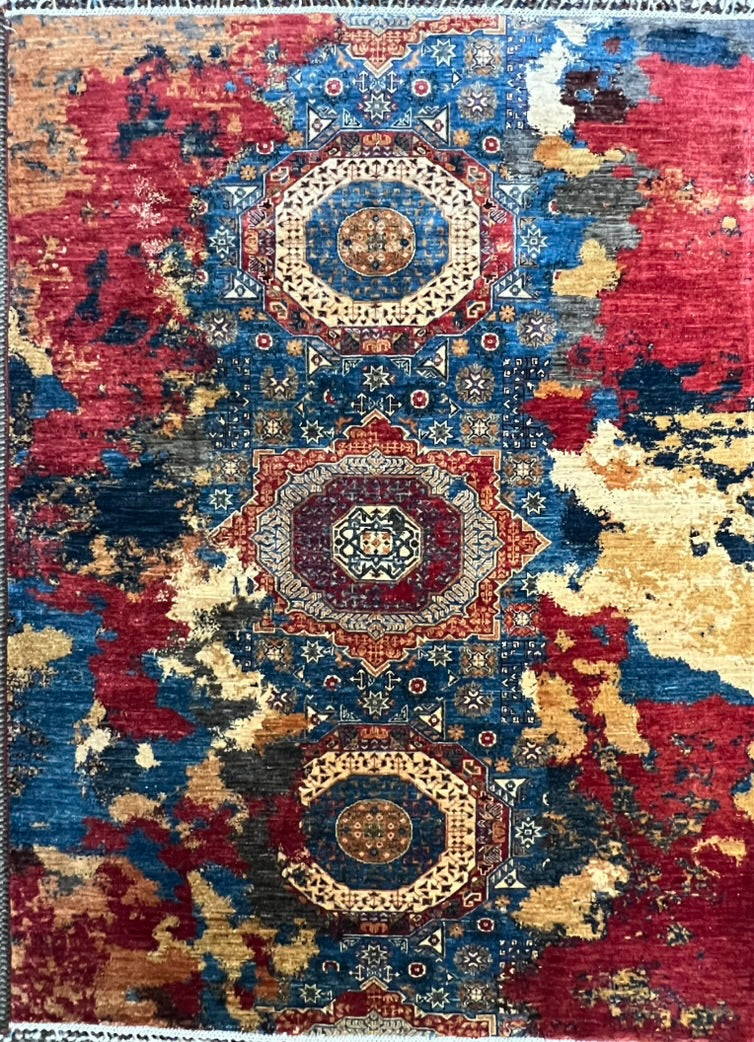
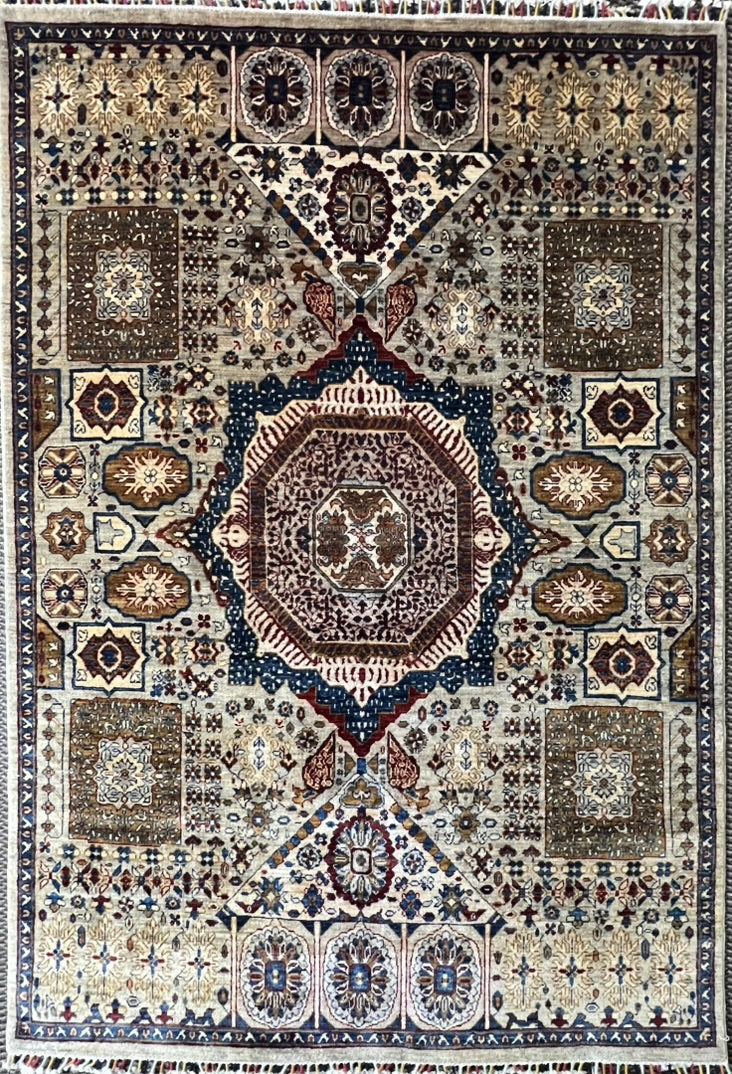
The Mamluk school is identified by four diagnostic markers, present together: a central medallion organized on octagonal or quatrefoil symmetry; a restrained palette built on terracotta, ivory, sage, and indigo (never the high-chroma reds of later Persian schools); a high knot density typical of court weaving; and the asymmetric (Senneh) knot worked on a cotton or wool foundation.
The original Mamluk rugs were woven in Cairo for the Mamluk sultanate between roughly 1450 and 1517. Surviving 15th- and 16th-century pieces sit in the Met, the Victoria & Albert, and the Museum of Islamic Art in Cairo. The school was effectively closed when the Ottomans absorbed Egypt in 1517 — but the design vocabulary has been carefully revived by our workshop in Afghanistan, and the contemporary Mamluk pieces in this collection are the result.
The medallion test. A true Mamluk medallion is built on octagonal or quatrefoil geometry, with stepped, architectural edges. Curvilinear medallions belong to other schools.
The palette test. Look for the terracotta-ivory-sage-indigo combination. No magenta, no high-chroma red, no bright yellow.
The knot test. Count the knots on the back: a finer rug can hold well over a hundred knots per square inch; ask us for the count on any rug. Lower densities are typical of village revivals; higher densities of master workshops.
The knot type. Asymmetric (Senneh) knot.
Mamluk pieces sit beautifully in formal rooms — paneled libraries, dining rooms with serious millwork, traditional sitting rooms. The architectural quality of the medallion rewards a room with strong vertical lines.
Insured U.S. delivery, from $45 and complimentary on rugs $3,500 and up. Live with it for 14 days. If it isn't right, we arrange the return pickup at no cost and refund the rug in full. Trade pricing available to design professionals.
16 pieces in current rotation
One of one$1,550.00
 One of one
$2,200.00
 One of one
$3,770.00
 One of one
$1,700.00
 One of one
$3,021.00
 One of one
$2,850.00
 One of one
$4,850.00
 One of one
$3,450.00
 One of one
$2,652.00
 One of one
$6,550.00
 One of one
$6,500.00
 One of one
$2,150.00
One of one$1,699.00
One of one$2,541.00
 One of one
$3,850.00
 One of one
$6,550.00